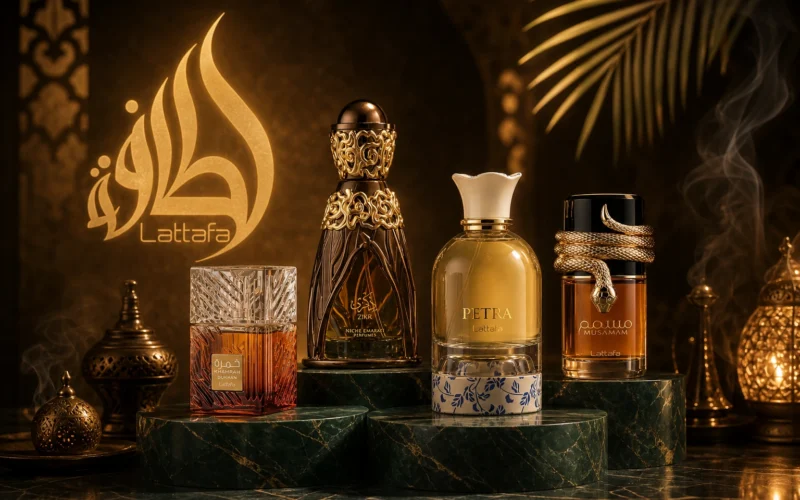
If oud, attar and bakhoor have ever sounded like three mysterious versions of the same thing, you are in good company. They often meet in the same fragrance conversation, but each plays a different role. Think of them as a precious ingredient, an intimate way of wearing perfume, and a ritual that fills the air.
Oud: a fragrant material
Oud is the aromatic resinous wood known more broadly as agarwood. It develops in certain Aquilaria trees after the tree responds to injury or infection. The resulting material can smell dark and smoky, but that is only one possibility. Some oud is honeyed and soft; some feels leathery, medicinal, earthy or almost fruity.
In perfumery, “oud” on a label may refer to natural agarwood oil, a crafted oud accord, or a combination. Natural oud can vary dramatically and is costly because resinous wood is scarce. Responsible sourcing matters too: Aquilaria species are protected through international trade controls, and reputable supply chains increasingly rely on managed plantations and documented material.
Choose oud when: you enjoy depth, slow development and a fragrance with a memorable base. If you are new to it, try oud paired with rose, vanilla or amber before moving toward more animalic styles — for example the woody trail of Smoky Wood from Anfar London.
Attar: concentrated perfume worn close
Attar—also written ittar—usually describes a concentrated perfume oil. Traditional attars may be made by distilling botanicals into a base such as sandalwood oil; modern attars also include carefully composed perfume concentrates in other carrier oils. Because the term covers more than one method, it is worth reading the maker’s description rather than assuming every attar is produced identically.
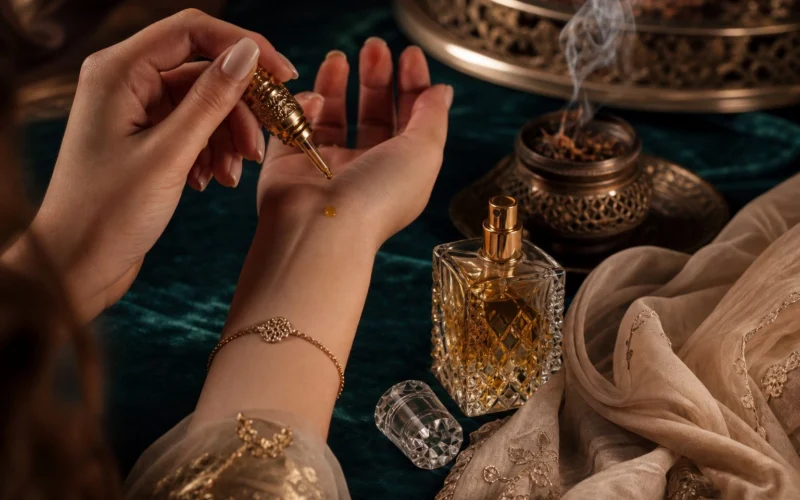
Attar is applied sparingly to pulse points. There is no alcohol flash, so the opening often feels smooth and close to the skin. Do not mistake closeness for weakness: a tiny drop can last for hours, and body heat reveals the composition gradually. In our shop, concentrated oils such as Oud Concentrated Oil offer that intimate ritual.
Choose attar when: you want a personal scent ritual, easy travel, precise application or something that sits closer than a conventional spray. Begin with less than you think you need.
Bakhoor: fragrance for a space
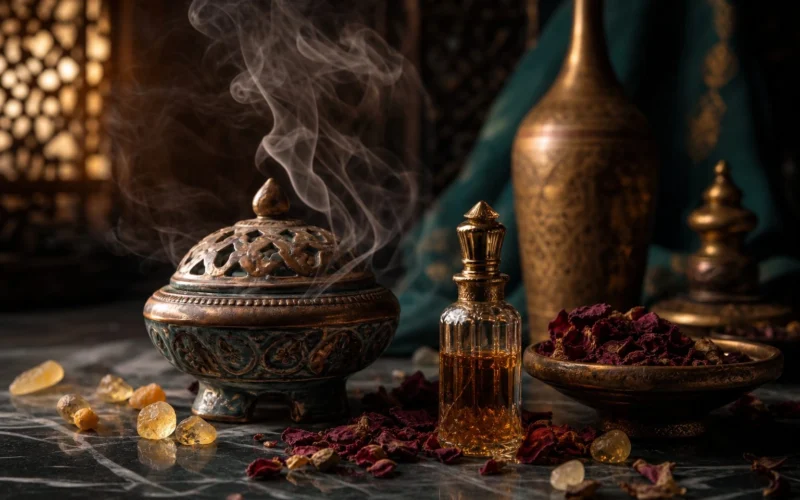
Bakhoor refers to scented wood chips or blended incense materials burned—or more accurately warmed—to release perfumed smoke. Recipes differ widely and may combine woods, resins, perfume oils, amber-like accords, florals and spices. It is used to fragrance rooms, clothing and special gatherings, and it often appears as part of hospitality.
Traditional charcoal produces rich smoke and requires a heat-safe burner, tongs, ventilation and close attention. Electric burners offer gentler control and can make the ritual easier indoors. In either case, use a small amount, keep the burner away from children and fabrics, and never leave it unattended. A classic chip such as Indian Sandal is a gentle place to begin.
Choose bakhoor when: you want the home itself to carry a scent story or you are preparing a room to welcome guests.
Can you use all three together?
Absolutely—and this is where the fun begins. Warm a little bakhoor while dressing, touch an attar to your wrists, then add a spray fragrance to your clothing. The secret is not maximum strength; it is harmony. Pick one shared idea, such as rose or amber, and let the layers speak at different volumes.
Patch-test oils, avoid applying perfume to irritated skin and remember that smoke sensitivity varies. Fragrance should make the moment more beautiful, never uncomfortable.
Ready to meet these materials in person? Explore our curated Arabic perfumes, learn the houses behind them in our Arabic perfume houses guide, then return to The Arabian Scent Journal whenever another perfume word needs a friendly translation.
Research note: conservation guidance reflects the international trade controls and documentation described by CITES for agarwood-producing species.