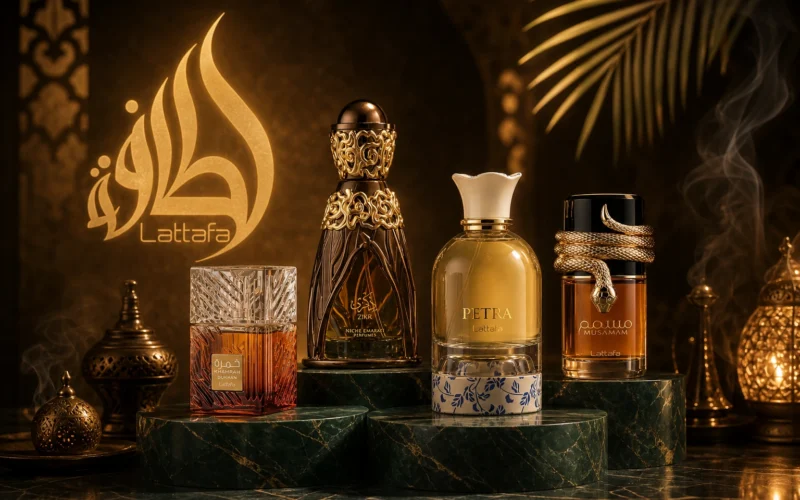
Come a little closer. Before perfume arrived in a glass bottle with a polished cap, fragrance travelled as smoke, oil, resin, wood and flower water. Across the Arabian Peninsula and the wider Islamic world, scent was never only decoration. It welcomed a guest, marked a celebration, prepared a home for prayer and made an ordinary evening feel considered.
A landscape already rich with scent
The story begins with geography. Southern Arabia sat close to historic sources and trade routes for frankincense and myrrh. Caravans and ports connected the peninsula with East Africa, India, the Mediterranean and Central Asia, carrying aromatics alongside textiles, spices and precious materials. The exact routes changed over centuries, but the result was lasting: perfumers had access to an unusually broad scent vocabulary.
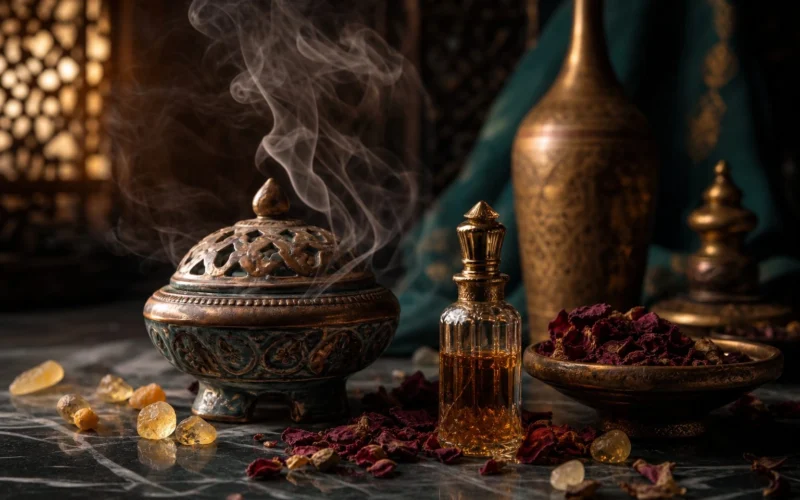
Homes and garments were perfumed by burning fragrant materials. Resins offered their mineral warmth; woods brought smoke and depth; flowers and herbs softened the composition. This is one reason many Arabian-style fragrances still feel architectural today. They are built in layers, with a base that seems to remain in the room after you leave.
Knowledge, craft and distillation
Perfumery also grew through scholarship. In the ninth century, the scholar al-Kindi described numerous perfume and aromatic preparations in his writings. Later, physicians and scientists across the Islamic world developed and documented distillation techniques. Ibn Sina, known in Europe as Avicenna, is often associated with refinements in the distillation of flowers such as rose, although distillation itself has a much older and geographically diverse history.
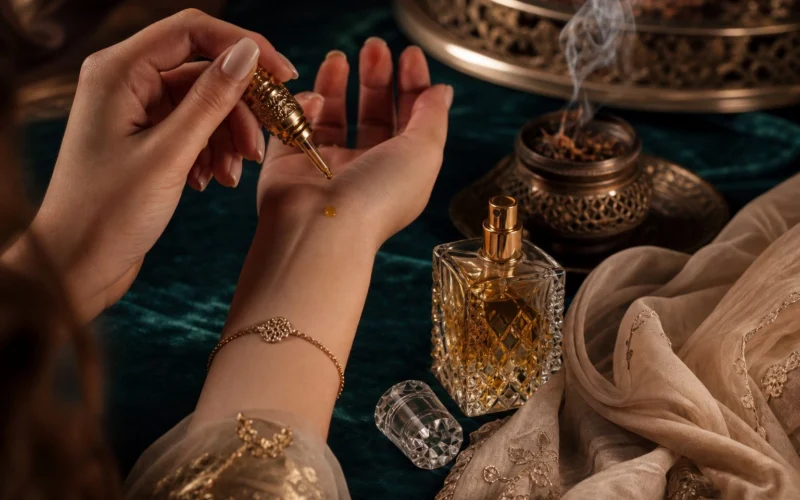
That careful meeting of observation and beauty helped flower waters and concentrated oils become more refined. Rose water gained an important place in hospitality, cooking and personal care. Oil perfume—often called attar—offered an intimate way to wear scent directly on pulse points, without alcohol and without announcing itself all at once. In our boutique you can still meet that intimate format in concentrated oils such as Oud Concentrated Oil.
Arabian perfumery is best understood not as one fixed style, but as a conversation between places, materials and generations.
Oud enters the composition
Oud comes from resin-rich agarwood formed when certain Aquilaria trees respond to injury or infection. Its scent can be woody, leathery, smoky, sweet, medicinal or animalic depending on origin, age and preparation. Agarwood traditions are strongly rooted in South and Southeast Asia, and trade brought the material into Middle Eastern scent culture, where it became deeply treasured.
In the Gulf, oud wood may be warmed as incense to perfume a room, clothing and hair. In modern fine fragrance, an oud accord can anchor rose, saffron, amber, musk or vanilla — the same instinct you feel in woody bottles from houses like Anfar London or warm spice-oud stories from Afnan, such as Historic Sahara.
A ritual that keeps evolving
Today, Arabian perfumery moves easily between heritage and modernity. A family may pass bakhoor around after dinner while a niche perfume house creates an airy oud designed for city life. Layering remains popular: perhaps a touch of oil on the skin, then an eau de parfum over clothing, followed by scented smoke at home.
What has survived is the generosity of the ritual. Fragrance is shared. It leaves a memory in fabric, in a doorway and in the embrace of someone you love. That human warmth is the real thread connecting ancient aromatics to the bottles we enjoy now.
Begin your own scent journey
You do not need to know every material before you begin. Start with one note that makes you curious—rose, amber, musk or oud—and notice how it changes over several hours. Browse our Arabic fragrance collection, meet the houses in our perfume houses guide, or continue exploring The Arabian Scent Journal.
Research note: historical context was checked against scholarship on al-Kindi’s perfume making and distillation writings.