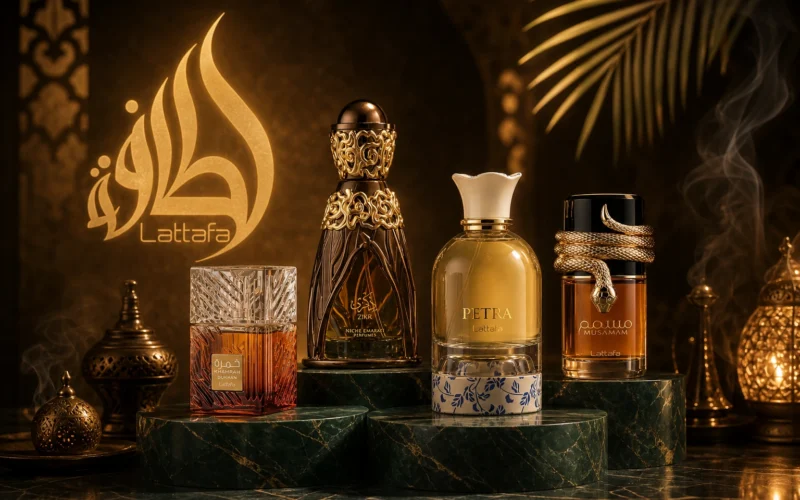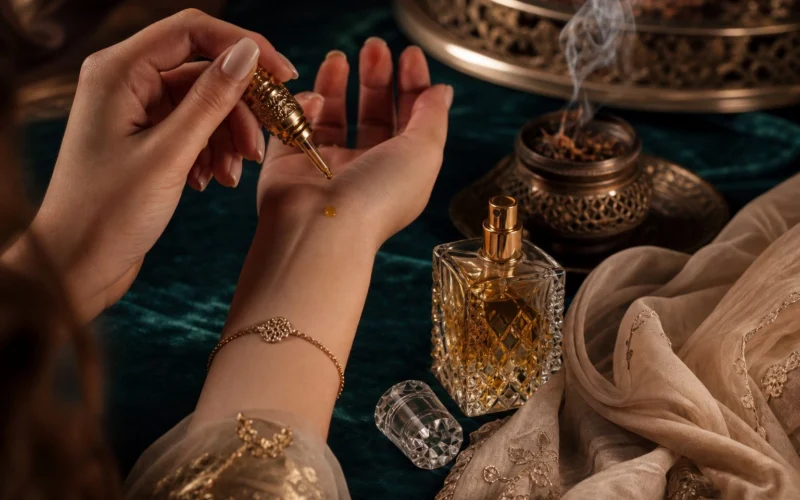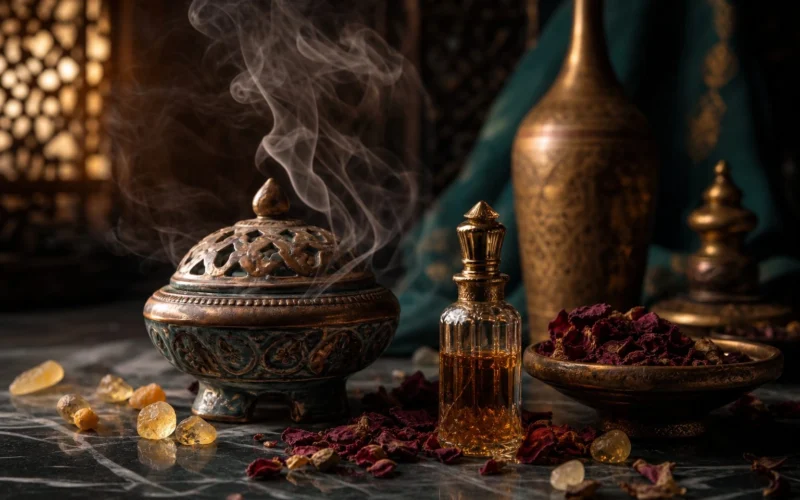
Fragrance has a wonderful habit of turning small moments into memories. Across the diverse countries and communities of the Arab world, scent traditions vary—but hospitality, care and self-expression appear again and again. Here are seven details to carry with you the next time oud smoke curls through a room or an amber perfume settles on your sleeve.
1. A fragrant welcome can be part of hospitality
In many homes, guests may be offered perfume or welcomed with incense. A burner can be passed carefully so scented smoke reaches clothing and hair. The gesture says more than “this room smells beautiful.” It says: you are expected, you are valued, stay a while. Customs differ by family and place, so it is better to see this as a living tradition than a single universal rule.
2. Perfume is often layered, not simply sprayed
Layering allows fragrance to become personal. Someone might begin with scented body care, apply a concentrated oil, spray an eau de parfum and perfume clothing with bakhoor. Each layer moves differently: oil stays close, spray creates projection, and smoke clings to fabric. The result is less like one loud note and more like a chord.
3. Clothes remember scent beautifully
Natural fibres can hold perfume and incense long after skin has softened them. That is why a scarf or outer garment may carry a familiar scent into the next day. Always test delicate fabric first and keep perfume oils away from pale material, as concentrated oils can mark clothing.
4. Rose and oud are partners, not opposites
Rose may sound delicate while oud sounds dark, yet together they create one of perfumery’s most enduring pairings. Rose lifts the composition with petal-like brightness; oud gives it shadow and structure. Depending on the balance, the result can be velvety, spicy, fresh or dramatically smoky.
5. “Amber” in perfume is usually an accord
In modern fragrance language, amber often means a warm composition built from materials such as labdanum, vanilla, benzoin and balsamic notes. It is not usually the fossilised gemstone. Perfumers can make amber feel powdery, resinous, sweet, dry or glowing—rather like changing the light in the same room.
6. Musk has changed with ethics and regulation
Historic musk came from the musk deer. Modern perfumery overwhelmingly uses synthetic musk molecules and plant-inspired accords instead. These materials do more than imitate an old scent: they can feel clean, cottony, creamy, warm or skin-like, and they help other notes last. The word “musk” on a modern bottle describes an olfactory family, not necessarily an animal ingredient.
7. Your skin is part of the formula
The same perfume can seem sweeter on one person and drier on another. Skin hydration, temperature, application amount, surrounding climate and what you smell nearby all influence perception. Body chemistry matters, but it is not magic—it is one part of a much larger sensory picture. This is why testing a fragrance over several hours tells you far more than smelling the cap.
The best fragrance is not the one that impresses everyone in the first minute. It is the one you keep leaning toward on your own wrist.
Make the ritual yours
Try one idea at a time. Layer rose with a gentle oud. Wear a soft musk on an ordinary Monday. Warm a small piece of bakhoor before friends arrive. There is no exam at the end—only the pleasure of noticing.
When you are ready, visit our Arabic fragrance collection or read another story in The Arabian Scent Journal. We will be here, probably smelling our wrists too.
Research note: the shift from animal musk to modern alternatives is supported by a peer-reviewed review of musk history and use.